Cure for Cancer: The 10 Biggest Obstacles to Creating an Effective Therapy

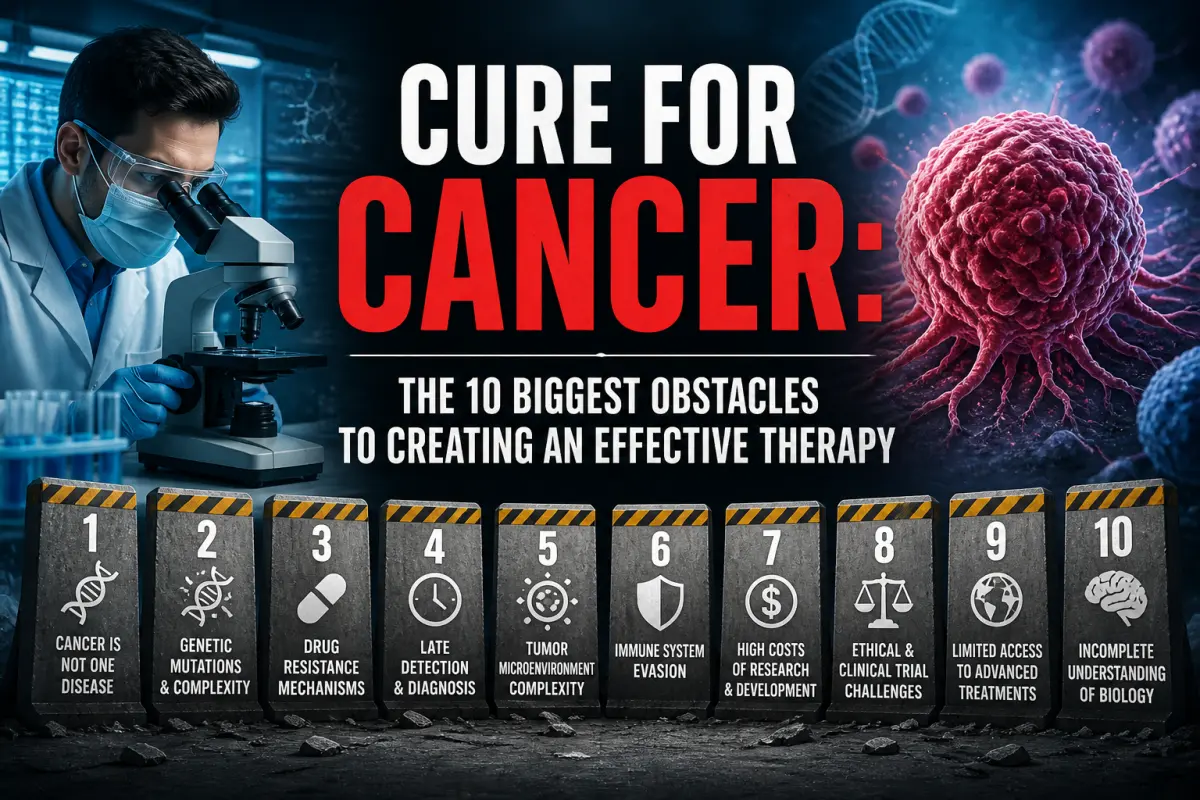
Understanding the Scientific, Economic, and Biological Barriers to a Universal Cancer Cure
Cancer remains one of the most complex diseases humanity has ever faced, with no single cure despite decades of intensive research. Scientists across the globe continue to search for breakthroughs, yet progress is often slowed by multiple overlapping challenges. Understanding these barriers is essential to appreciating why a universal cure is still out of reach.
Why finding a universal cancer cure is so difficult 🧬
Cancer is not a single disease but a collection of hundreds of different conditions, each with unique genetic mutations and behaviors. This diversity makes it extremely difficult to develop a one-size-fits-all treatment. Additionally, cancer evolves rapidly, adapting to therapies and developing resistance over time. These combined factors create a moving target that challenges even the most advanced scientific approaches.
1. Cancer Is Not One Disease but Many 🔬
Cancer includes hundreds of distinct diseases, each originating in different tissues and driven by unique mutations that affect how cells grow and divide. Some cancers develop slowly over many years, while others progress aggressively within a short time, making their treatment approaches vastly different. This diversity means that therapies must be tailored not only to the cancer type but also to its stage and biological characteristics.
This biological complexity forces researchers to focus on highly specialized therapies designed for specific cancer subtypes rather than pursuing a single universal cure. As a result, scientific progress is divided across multiple areas of oncology, slowing the overall pace of breakthroughs. The need for personalization in treatment adds another layer of difficulty, requiring advanced diagnostics and precision medicine strategies.
2. Genetic Mutations and Tumor Complexity 🧪
Cancer cells are characterized by numerous genetic mutations that vary widely between patients and even within different regions of the same tumor. This internal diversity, known as tumor heterogeneity, makes it difficult to target all cancerous cells effectively with a single therapy. Even if one mutation is successfully targeted, others may continue to drive tumor growth and survival.
Additionally, tumors evolve over time, constantly acquiring new mutations as they adapt to environmental pressures and treatments. This dynamic nature means that therapies must be flexible and often combined to remain effective. Researchers must continuously monitor these changes, making cancer treatment a highly complex and evolving challenge.
3. Drug Resistance Mechanisms 💊
One of the most frustrating challenges in oncology is the ability of cancer cells to develop resistance to treatments that were once effective. Initially, therapies such as chemotherapy or targeted drugs may shrink tumors significantly, but over time, cancer cells can adapt and become less responsive. This leads to relapse and limits long-term treatment success.
Resistance can occur through multiple mechanisms, including genetic mutations, drug efflux, or alterations in cellular pathways that bypass the drug’s effects. Overcoming this requires the development of combination therapies and next-generation drugs that can address multiple targets simultaneously. Despite progress, drug resistance remains a major barrier to achieving lasting cures.
4. Late Detection and Diagnosis ⏱️
Many cancers are diagnosed at advanced stages when symptoms become noticeable, significantly reducing the chances of successful treatment. Early-stage cancers are often asymptomatic or produce vague symptoms that are easily overlooked. This delay in detection allows tumors to grow and spread before intervention begins.
Although screening technologies have improved, they are not universally available or sufficiently accurate for all cancer types. False positives and negatives can complicate diagnosis, leading to unnecessary treatments or missed opportunities for early intervention. Improving early detection methods is crucial for increasing survival rates and treatment effectiveness.
5. Tumor Microenvironment Complexity 🌱
The tumor microenvironment consists of surrounding cells, blood vessels, immune components, and signaling molecules that interact with cancer cells. This environment plays a crucial role in supporting tumor growth, protecting cancer cells from therapies, and facilitating metastasis. It is not just the tumor itself but its ecosystem that must be addressed.
Targeting this complex system is extremely challenging because treatments must avoid damaging healthy tissues while disrupting cancer-supporting processes. Researchers are increasingly focusing on therapies that modify the microenvironment, but this approach adds another layer of complexity to drug development. Understanding these interactions is key to future breakthroughs.
6. Immune System Evasion 🛡️
Cancer cells have evolved sophisticated mechanisms to evade detection and destruction by the immune system. They can alter their surface markers, produce immunosuppressive signals, or create a protective environment that weakens immune responses. This allows tumors to grow even in the presence of immune defenses.
Immunotherapy has revolutionized cancer treatment by reactivating the immune system, but it does not work for all patients or cancer types. Some tumors remain resistant to immune-based approaches, highlighting the need for deeper understanding. Enhancing immune recognition and response remains a critical area of ongoing research.
7. High Costs of Research and Development 💰
Developing new cancer treatments is an incredibly expensive and time-consuming process that often takes over a decade and billions of dollars. From early laboratory research to clinical trials and regulatory approval, each stage requires significant investment. These high costs limit the number of therapies that can be developed and tested.
Pharmaceutical companies must also consider financial risks, as many experimental treatments fail before reaching the market. This economic reality can slow innovation and prioritize treatments with higher chances of profitability. Balancing scientific advancement with financial sustainability remains a major challenge in oncology.
8. Ethical and Clinical Trial Challenges ⚖️
Clinical trials are essential for evaluating the safety and effectiveness of new cancer therapies, but they are complex and strictly regulated. Ethical considerations ensure patient safety but can slow the process of testing innovative treatments. Designing trials that are both ethical and efficient is a delicate balance.
Recruiting participants, obtaining informed consent, and meeting regulatory requirements all add to the complexity and duration of trials. Additionally, differences in patient populations can affect results and limit generalizability. These challenges contribute to the long timeline required to bring new therapies to patients.
9. Limited Access to Advanced Treatments 🌍
Access to cutting-edge cancer treatments varies significantly across different regions of the world. In many low- and middle-income countries, advanced therapies are either unavailable or unaffordable for the majority of patients. This creates a significant global disparity in cancer outcomes.
Even in developed countries, healthcare systems may struggle to provide equal access to expensive treatments. Insurance coverage, infrastructure, and availability of specialists all influence patient outcomes. Addressing these inequalities is essential for ensuring that medical progress benefits everyone.
10. Incomplete Understanding of Cancer Biology 🧠
Despite decades of research and major scientific advancements, many aspects of cancer biology remain poorly understood. The interactions between genes, proteins, and environmental factors are highly complex and not fully mapped. This incomplete knowledge limits the ability to design fully effective therapies.
Ongoing research continues to uncover new mechanisms and potential treatment targets, but each discovery often reveals additional layers of complexity. A deeper understanding of cancer biology is essential for developing more precise and durable treatments. Continued investment in basic science is critical for future breakthroughs.
The search for a cure for cancer continues to be one of the greatest challenges in modern medicine. While significant progress has been made, numerous obstacles still stand in the way of a universal solution. Overcoming these barriers will require global collaboration, innovation, and sustained investment in research.
Sources 📚
1. World Health Organization (WHO) – Cancer Overview
2. National Cancer Institute (cancer.gov) – Cancer Research and Statistics
3. Wikipedia – Cancer and Oncology Research