
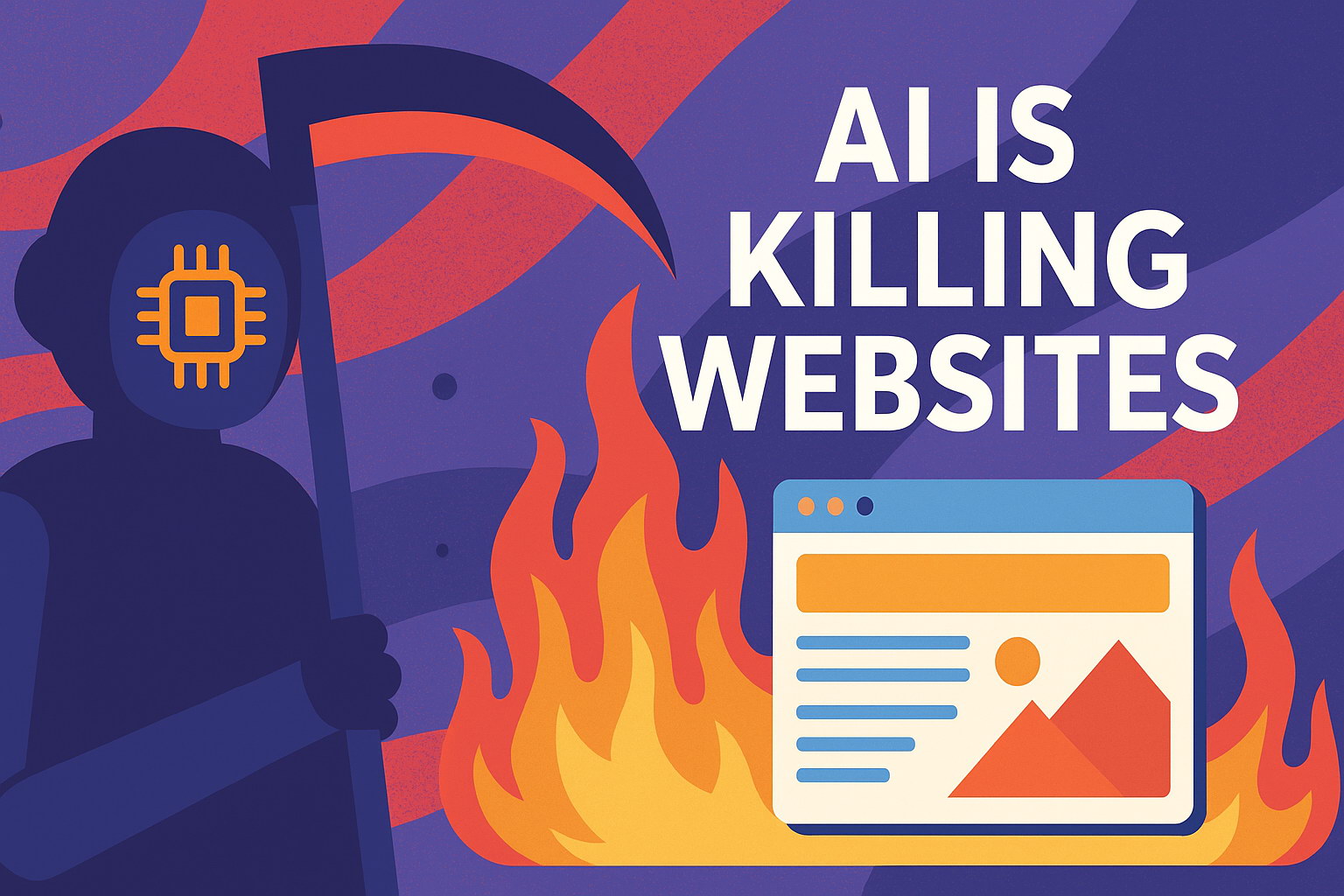
In an era where artificial intelligence (AI) is transforming nearly every industry, the world of web design and development is no exception. While AI has brought many advancements and efficiencies, its integration into the online world has also resulted in a series of consequences that could ultimately lead to the death of traditional websites. With the rise of AI-powered tools that can generate content, automate processes, and optimize user experience, the need for human intervention in website development has significantly diminished. In many ways, AI is putting the very idea of a website as we know it on the verge of obsolescence.
AI-Powered Website Builders Replace Designers
AI-driven website builders, such as Wix, Squarespace, and WordPress plugins, have already begun to replace the role of designers and developers. These platforms offer intuitive interfaces that allow anyone, regardless of technical skill, to create fully functional websites. As AI continues to evolve, these platforms are incorporating machine learning algorithms that enable them to automatically design sites based on user preferences and data analytics. This means that the days of manually coding, designing, and curating content for a website could soon be over. The AI doesn’t just assist; it takes over, making it easier than ever for anyone to set up a site without the need for a human touch.
AI in Content Creation
Furthermore, the rise of AI-driven content creation tools, such as GPT-3 and other natural language processing models, has made it possible for websites to be populated with high-quality, engaging content automatically. The need for human writers, journalists, and content strategists is diminishing as these AI models can churn out articles, blogs, and even entire websites at a speed and scale far beyond what humans could ever achieve. With the ability to tailor content to the specific interests of users based on their browsing habits and data, AI is transforming the content landscape, leaving traditional websites that rely on human creativity and thought processes behind. As AI becomes more sophisticated, the very concept of a “unique” website, crafted by a human with individual thought and creativity, is being eroded.
Websites Become Autonomous
Additionally, the traditional model of a website being a static, relatively unchanging entity is being disrupted. AI and machine learning algorithms can now continuously update and optimize a website’s content, design, and structure based on real-time user data and behavioral patterns. This means that websites are no longer a set-and-forget project. Instead, they evolve autonomously, adapting to user preferences without the need for ongoing human input. For businesses, this may sound like a dream come true; however, for web developers and designers, it’s a nightmare. The skills that were once essential for creating and maintaining websites are becoming less and less relevant, as AI can take over these tasks with little to no intervention from humans.
Enhanced User Experience Through AI
AI is also affecting the user experience in ways that traditional websites can’t match. Personalized experiences, once the realm of highly sophisticated websites, are now standard across nearly all AI-driven platforms. Through the use of data analytics, AI can create highly tailored user interfaces, ensuring that every visitor has a unique and optimized experience based on their behavior and preferences. In contrast, traditional websites that rely on static designs and fixed content cannot compete with the speed and flexibility of AI-powered alternatives. With websites becoming more reactive, adaptive, and intuitive thanks to AI, it’s becoming increasingly difficult to justify the value of a traditional website built by humans.
Automation of Backend Systems
Furthermore, AI’s influence isn’t limited to design and content creation. The backend infrastructure of websites is also being overhauled by AI, with automated systems handling everything from SEO optimization to security measures. AI-powered bots are now capable of monitoring and adjusting SEO strategies in real-time, analyzing search engine algorithms, and making automatic adjustments to improve website rankings. This means that businesses and individuals no longer need to rely on human SEO experts to maintain their online visibility. The same goes for security; AI systems are now monitoring websites 24/7, automatically identifying and addressing vulnerabilities without the need for manual intervention.
The Death of Traditional Web Development
While AI brings undeniable efficiency and ease, it also leads to a world where traditional web development is becoming a niche skill rather than a mainstream profession. The market for human-designed websites is shrinking as businesses and individuals turn to AI-powered platforms to build, manage, and optimize their online presence. This shift is driving a wedge between those who can afford to invest in AI-driven solutions and those who still rely on human designers and developers, creating an uneven playing field in the web industry. Furthermore, as AI becomes more ubiquitous, there’s a real risk that the web will lose its diversity and creativity, as AI-generated sites are likely to follow similar patterns based on data rather than human inspiration.
Homogenization of the Web
In conclusion, AI is undeniably revolutionizing the world of websites, but not necessarily in a way that benefits traditional web design and development. While the tools that AI provides are incredibly powerful and useful, they also signal the slow death of the traditional website as we know it. As AI continues to take over design, content creation, optimization, and user experience, human involvement in the creation and maintenance of websites is likely to continue to decline. This could lead to a future where the web becomes homogenized, automated, and devoid of the creativity and individuality that once defined it. As AI pushes forward, it’s clear that traditional websites — and the people who created them — may soon be left in the dust.


