ChatGPT Images 2.0. What’s New in OpenAI’s Image Revolution?

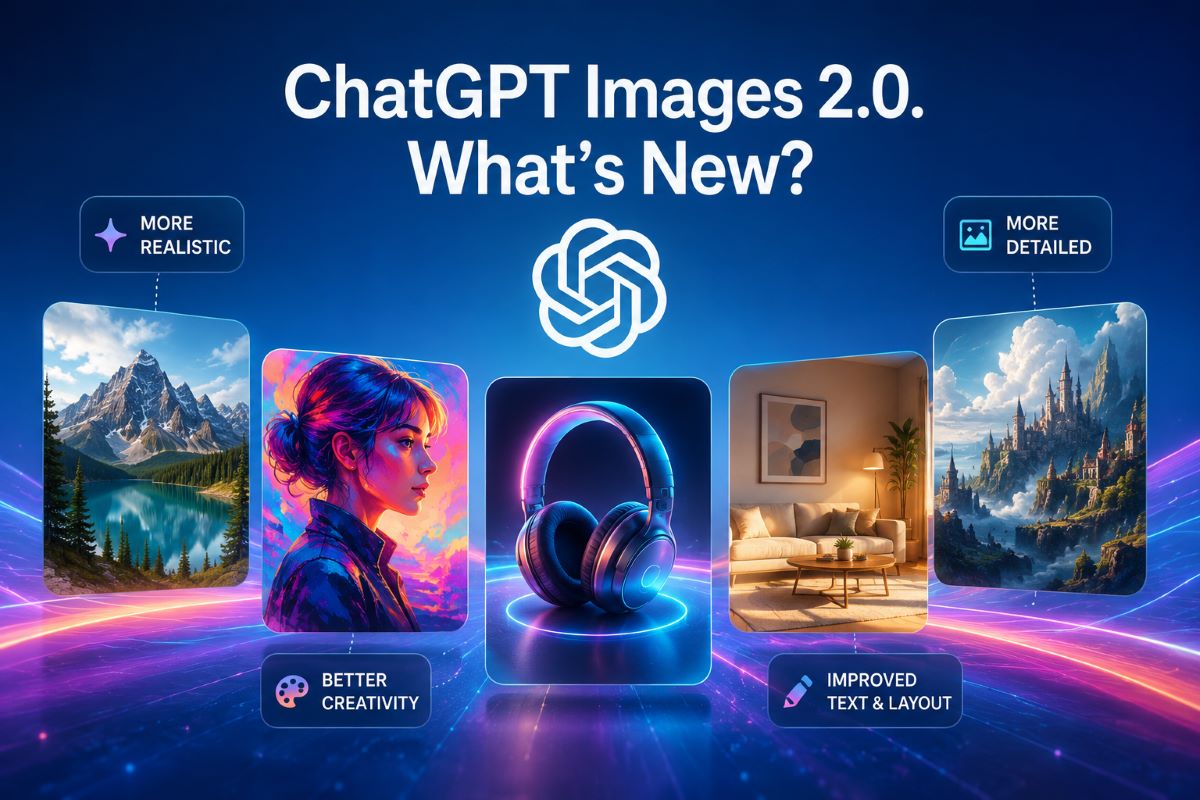
🚀 ChatGPT Images 2.0 introduces smarter AI graphics, advanced editing, and realistic visual generation
OpenAI has officially presented ChatGPT Images 2.0, a major upgrade focused on image generation, editing quality, and visual reasoning. The new system combines language understanding with advanced graphics creation, allowing users to build complex scenes, infographics, and realistic artwork much faster. Many creators already describe the update as one of the biggest AI image breakthroughs in recent years.
✨ Better image quality and more precise visual understanding
ChatGPT Images 2.0 significantly improves detail accuracy, lighting realism, and composition consistency in generated graphics. OpenAI focused heavily on understanding prompts with complex instructions, making the model far more reliable during advanced creative projects. The platform now handles typography, small interface elements, and visual balance with much stronger precision than earlier versions.
🎨 Smarter prompts create more professional artwork
One of the most noticeable upgrades is the system’s ability to interpret layered prompts without losing important details. Designers can describe scenes with complex environments, camera angles, colors, and emotions while the AI keeps visual coherence across the final image. This improvement reduces the need for repeated prompt corrections and saves creators valuable production time.
OpenAI also introduced stronger multilingual text rendering, which helps generate posters, slides, menus, and marketing visuals containing readable text. Earlier AI image systems often struggled with distorted letters or broken typography, but Images 2.0 handles many languages with improved clarity. The update makes AI graphics more practical for business presentations and digital publishing workflows.
🖼️ AI editing tools become faster and more natural
ChatGPT Images 2.0 expands editing functions by allowing users to modify selected parts of existing images while preserving style consistency. Creators can replace objects, improve lighting, or redesign backgrounds without rebuilding an entire composition from scratch. This targeted editing process feels closer to professional graphic software than traditional AI image generators.
The system also supports generating multiple matching visuals from a single request, which is useful for branding campaigns and social media content. OpenAI explained that the model can reason through visual relationships before generating results, improving consistency between separate images. This approach helps businesses maintain a unified style across large creative projects.
📊 Infographics, comics, and UI designs gain huge improvements
Another important innovation is the ability to generate complex layouts containing charts, diagrams, comics, and user interface concepts. Previous image models often failed when too many visual elements appeared inside one composition, especially with readable text. Images 2.0 manages dense layouts more effectively, making it attractive for educational and commercial design tasks.
Technology analysts noted that the platform performs especially well with infographics, manga panels, and presentation slides requiring visual structure. The AI can arrange icons, text blocks, and illustrations with improved spatial understanding while maintaining cleaner aesthetics. These capabilities position ChatGPT Images 2.0 as a competitive tool for both creators and companies.
🌍 Multilingual support and realism reach a new level
OpenAI highlighted major advances in multilingual support, including better rendering for Japanese, Korean, Hindi, Bengali, and other non Latin writing systems. The model also produces more realistic textures, reflections, and photographic depth than previous releases. Many early users shared examples online showing visuals that appear almost indistinguishable from authentic photography.
The growing realism of AI generated images also raises discussions around ethics, misinformation, and copyright concerns. OpenAI stated that new safety systems, filtering layers, and watermark protections were integrated into the model to reduce harmful misuse. The company continues limiting attempts to imitate living artists directly or generate deceptive political content.
⚡ ChatGPT Images 2.0 changes the future of creative work
Experts believe ChatGPT Images 2.0 could transform workflows in advertising, education, entertainment, and digital publishing. Faster image generation combined with intelligent editing allows smaller teams to produce professional visuals without expensive software or large creative departments. This may lower production costs while increasing the speed of modern content creation across many industries.
OpenAI also connected the model with API access through GPT Image 2, giving developers more flexibility for applications and commercial platforms. Businesses can integrate advanced image generation directly into websites, design tools, and automation systems. The expansion of AI driven graphics suggests that visual content creation will become increasingly automated during the coming years.
ChatGPT Images 2.0 represents a major leap forward in the evolution of generative AI and digital creativity. The platform combines stronger reasoning, realistic visuals, and practical editing tools into one integrated experience for creators and businesses. As competition in AI graphics accelerates, OpenAI’s latest release may become a defining standard for future image generation systems.
Sources
- OpenAI – Introducing ChatGPT Images 2.0
- TechCrunch – ChatGPT’s new Images 2.0 model is surprisingly good at generating text
- VentureBeat – OpenAI’s ChatGPT Images 2.0 and advanced visual generation