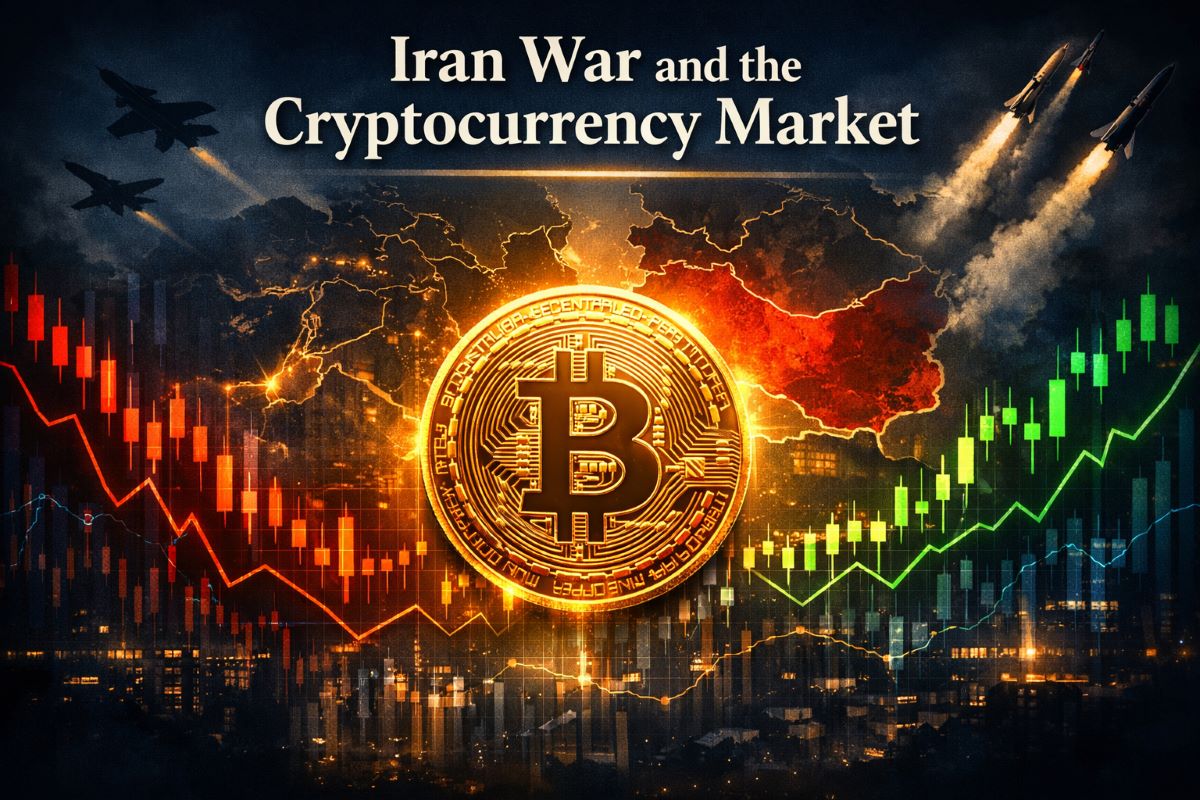
Iran vs USA/Israel: How the Middle East War Could Impact the Cryptocurrency Market

Bitcoin in Times of War: The Impact of the Iran vs Israel/United States Conflict on Crypto Markets 📉📈
Global conflicts have always influenced financial markets, and the cryptocurrency market is no exception. A potential war involving Iran could trigger major volatility across global markets, including Bitcoin and altcoins. Geopolitical tensions affect investor sentiment, energy prices, global liquidity, and regulatory pressure — all of which play a crucial role in crypto market dynamics.
In recent years, cryptocurrencies have evolved from a niche technology into a global financial asset class.
As a result, they are increasingly sensitive to macroeconomic and geopolitical events such as wars, sanctions, and global financial instability.
1. Initial Market Reaction: Panic and Sell-Offs 😨
The first reaction of financial markets to geopolitical escalation is usually a sudden increase in uncertainty.
Investors typically move capital away from risky assets toward traditional safe havens such as the US dollar, government bonds, and gold.
Cryptocurrencies are often classified as risk assets, which means they tend to experience short-term selling pressure when global crises emerge.
Typical market reaction during geopolitical shocks:
- Rapid Bitcoin price drops
- Liquidation of leveraged positions
- High volatility across altcoins
- Temporary decline in trading volume
For example, during recent Middle East tensions, Bitcoin briefly dropped as investors reacted to uncertainty before stabilizing again.
2. The Second Phase: Market Recovery and “Buy the Dip” 📊
Interestingly, cryptocurrency markets often recover quickly after the initial shock.
Once the panic selling subsides, traders and institutional investors frequently start buying the dip.
Historically, crypto markets have shown resilience after geopolitical crises.
The conflict in Ukraine in 2022 demonstrated how Bitcoin initially dropped but later rebounded as investors regained confidence.
Why crypto markets often rebound:
- Speculative traders entering during price dips
- Global liquidity returning to markets
- High demand for volatile trading opportunities
- Long-term bullish sentiment in crypto
Because crypto trades 24/7 globally, recovery can happen faster than in traditional markets.
3. Crypto as a Tool to Bypass Sanctions 💰
One of the most significant geopolitical aspects of a potential Iran conflict is economic sanctions.
Iran has been under international financial restrictions for years, limiting its access to the global banking system.
Cryptocurrencies provide an alternative financial infrastructure that can operate outside traditional banking networks.
Possible uses of crypto in sanctioned economies:
- International trade settlements
- Capital transfers across borders
- Preserving wealth during currency instability
- Alternative payment infrastructure
Blockchain analysis companies have previously reported increased crypto activity in sanctioned regions during periods of geopolitical tension.
4. Oil Prices, Inflation, and Their Impact on Crypto ⛽
Iran is one of the world’s key oil producers, meaning any military conflict could disrupt energy supply chains.
Higher oil prices typically trigger inflation across global economies.
Rising energy prices can lead to tighter monetary policy, which reduces liquidity in financial markets.
This can affect crypto in several ways:
- Higher interest rates reduce investment in speculative assets
- Lower global liquidity pressures risk markets
- Energy costs increase mining expenses
Bitcoin mining operations are particularly sensitive to electricity prices, making energy markets an important factor for crypto economics.
5. The Bitcoin Paradox: Risk Asset or Safe Haven? 🪙
Bitcoin occupies a unique position in global finance.
It is often described as “digital gold,” yet it still behaves like a high-risk technology asset during short-term market stress.
Two competing narratives exist:
- Risk asset – correlated with tech stocks and speculative markets
- Safe haven – an alternative store of value outside traditional finance
Because of this dual identity, Bitcoin’s reaction to geopolitical conflict is often mixed.
In the immediate aftermath of a crisis, prices may fall. Over time, however, investors may increasingly view Bitcoin as a hedge against financial instability.
Possible Scenarios for the Crypto Market
1. Short-Term Conflict ⚡
- Temporary panic in crypto markets
- Short-term price volatility
- Quick recovery as traders buy the dip
2. Prolonged Regional War 🌍
- Reduced global liquidity
- Decline in risk appetite
- Pressure on altcoins and speculative assets
3. Global Energy or Financial Crisis 📉
- Initial market crash
- Potential long-term adoption of crypto as an alternative financial system
Conclusion: War Increases Volatility — Not Necessarily a Crash
A potential war involving Iran would likely increase volatility across financial markets, including cryptocurrencies.
However, historical patterns suggest that crypto markets often recover after the initial shock.
Geopolitical crises typically follow a three-stage pattern in crypto markets:
- Initial panic and price decline
- Market stabilization
- Speculative rebound
At the same time, conflicts and sanctions may accelerate the real-world adoption of cryptocurrencies in regions facing financial restrictions.
For investors, this means that geopolitical risk may create short-term turbulence — but it could also reinforce the long-term relevance of decentralized financial systems.
Sources
- Reuters – Crypto outflows from Iranian exchanges during geopolitical tensions
- Wall Street Journal – Bitcoin market reaction to Middle East conflict
- Business Insider – Global markets and oil price response to Iran tensions
- Chainalysis – Cryptocurrency activity in sanctioned economies
- Academic research on geopolitical risk and cryptocurrency markets