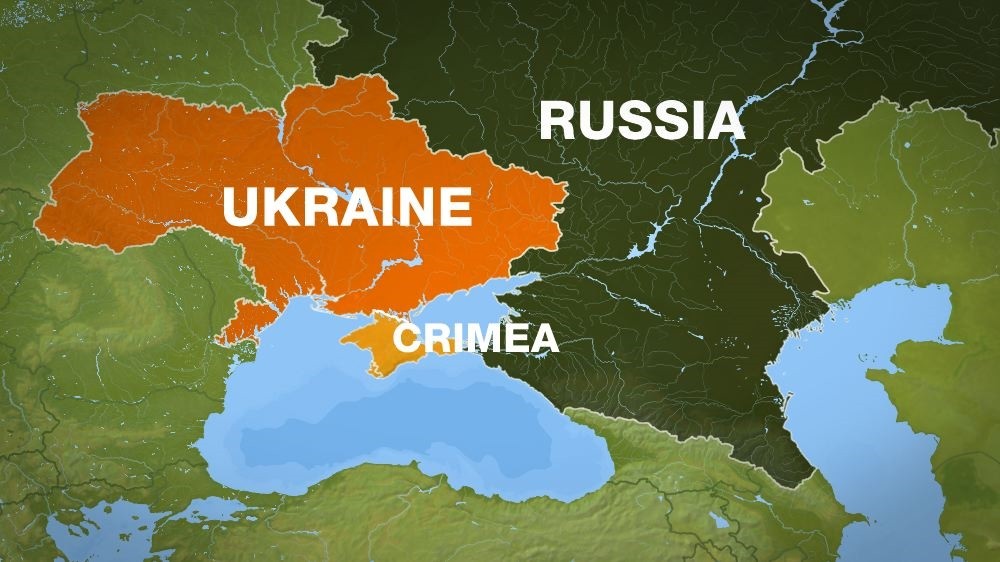
Historical Background
Crimea has a complex history. Once part of the Russian Empire, it was transferred to the Ukrainian Soviet Socialist Republic in 1954. When the Soviet Union collapsed in 1991, Crimea became part of the newly independent Ukraine, while retaining a degree of autonomy.
Annexation by Russia in 2014
In February 2014, following political unrest in Ukraine and the ousting of President Viktor Yanukovych, Russian forces entered Crimea. Soon after, a referendum was held under Russian supervision, in which officials claimed overwhelming support for joining Russia. However, the vote was widely criticized as illegitimate by the United Nations, the European Union, NATO, and the majority of countries worldwide.
On March 18, 2014, Russia officially annexed Crimea, declaring it part of the Russian Federation.
International Response
- Ukraine: Asserts sovereignty over Crimea, considering the territory illegally occupied.
- United Nations: Declared the referendum invalid, reaffirmed Ukraine’s territorial integrity.
- Western Countries: Imposed sanctions on Russia in response to the annexation.
- Russia: Administers Crimea as one of its federal subjects.
De Jure vs. De Facto Status
De jure: Crimea is internationally recognized as part of Ukraine.
De facto: Russia administers Crimea as its own territory.
Crimea in the Context of the 2022 War
Russia’s full-scale invasion of Ukraine in February 2022 has once again placed Crimea in the spotlight. The peninsula serves as a key military base for Russian operations, including naval deployments in the Black Sea. Ukraine has repeatedly stated that the return of Crimea is one of its ultimate war goals, while Russia insists that the peninsula’s status is non-negotiable.
Human Rights and Local Impact
Since 2014, reports from organizations such as Amnesty International and Human Rights Watch have documented violations of civil rights in Crimea, particularly against ethnic Ukrainians and Crimean Tatars. Restrictions on free speech, suppression of Ukrainian culture, and militarization have changed everyday life on the peninsula.
Key Facts About Crimea
| Category | Data / Information |
|---|---|
| Population | ~2.4 million (2023 est.) |
| Area | ~27,000 km² |
| Capital | Simferopol |
| Major Cities | Sevastopol, Yalta, Kerch, Feodosia, Bakhchisarai |
| Ethnic Composition | Russians ~65%, Ukrainians ~15%, Crimean Tatars ~12%, Others ~8% |
| Official Languages (de facto) | Russian (dominant); Ukrainian and Crimean Tatar limited |
| Religion | Majority Eastern Orthodox; significant Muslim minority |
| Currency | Russian ruble (since 2014) |
| Time Zone | Moscow Standard Time (UTC+3) |
| Geography | Peninsula on the Black Sea; connected by Perekop Isthmus and the Kerch Bridge |
| Economy | Tourism, agriculture, fishing, military industry |
| Strategic Importance | Base of the Russian Black Sea Fleet |
| Transport | Kerch Bridge, ports, Simferopol airport (restricted) |
| UN Status | Recognized as part of Ukraine |
| De Facto Control | Administered by Russia since 2014 |
Interesting Facts About Crimea
Beyond politics and international disputes, Crimea has a rich cultural and historical heritage. During the Soviet era, it was known as the “Soviet Riviera,” famous for beaches and resorts. Even today, despite restrictions, it remains a popular destination for Russian tourists.
In 1945, the Yalta Conference brought Roosevelt, Churchill, and Stalin together at the Livadia Palace to shape the postwar order of Europe. The decisions made there influenced world politics for decades.
The Crimean Tatars, the indigenous Muslim people, were deported en masse by Stalin in 1944. Thousands died, and only after the fall of the Soviet Union were they allowed to return. Today they play a vital role in preserving Crimea’s cultural identity, despite challenges under Russian rule.
Geographically, Crimea is diverse: mountains and vineyards dominate the south, while steppe landscapes stretch across the north. This mix has made the peninsula both strategically important and culturally vibrant.
Conclusion
The status of Crimea remains one of the most contentious issues in global politics. While Russia maintains firm control, the international community continues to recognize the peninsula as Ukrainian territory. The outcome of the war in Ukraine may ultimately determine Crimea’s future, but until then, it symbolizes the tension between international law and geopolitical realities.