🌍 Explore Lisbon’s Population, Maritime Heritage, Climate and Most Famous Attractions
Lisbon is the capital and largest city of Portugal, renowned for its colorful architecture, historic neighborhoods, and rich maritime heritage. Situated along the Atlantic coast at the mouth of the Tagus River, Lisbon has served as an important trading and cultural center for centuries. Today, it attracts millions of visitors who come to experience its history, cuisine, scenic viewpoints, and vibrant atmosphere.
🏙️ Lisbon at a Glance: Portugal’s Coastal Capital
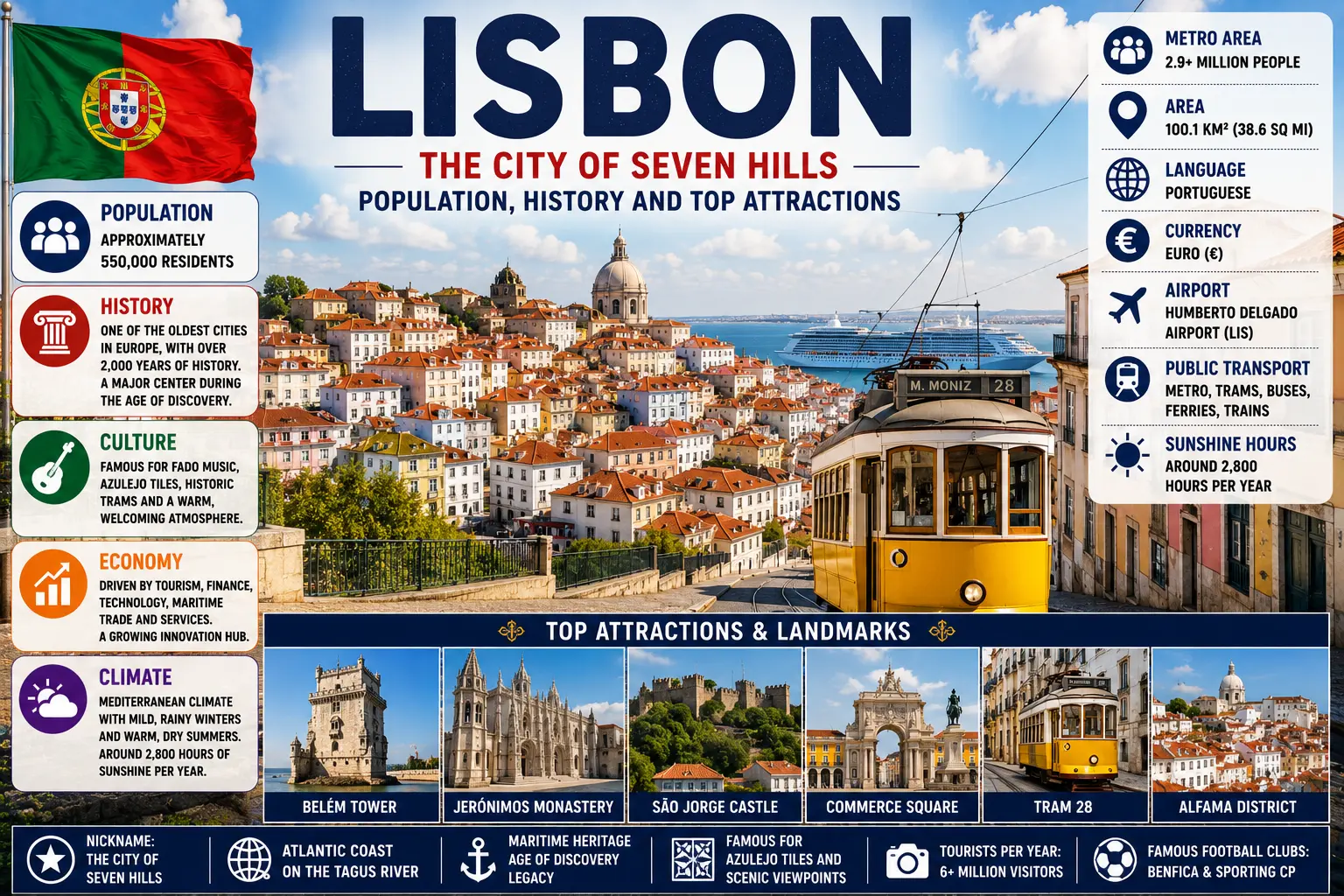
With more than half a million residents within the city and nearly three million people in the metropolitan area, Lisbon is Portugal’s political, economic, and cultural center. The city is built across seven hills, creating a unique landscape of steep streets, panoramic viewpoints, and picturesque neighborhoods.
Lisbon combines centuries-old landmarks with modern development, offering visitors a fascinating mix of tradition and innovation. Its strategic location on the Atlantic Ocean helped transform it into one of Europe’s most influential maritime cities.
👥 Population and Demographic Growth in Lisbon
Lisbon has a population of approximately 550,000 residents, while the metropolitan region exceeds 2.9 million inhabitants. Although the city center has experienced periods of population decline, the wider metropolitan area continues to grow due to economic opportunities and urban expansion.
The capital is increasingly international, attracting residents from Europe, Brazil, Africa, and Asia. This multicultural population contributes to Lisbon’s dynamic cultural scene, diverse culinary offerings, and growing global appeal.
🏛️ The Rich History of Lisbon Through the Centuries
Lisbon is one of the oldest cities in Western Europe, with origins dating back thousands of years. Phoenicians, Romans, Visigoths, and Moors all occupied the region before it became part of the Kingdom of Portugal in the 12th century.
The city reached global prominence during the Age of Discovery when Portuguese explorers launched expeditions that connected Europe with Africa, Asia, and the Americas. Despite suffering a devastating earthquake in 1755, Lisbon was rebuilt and emerged as a modern European capital.
🎭 Culture, Lifestyle and the Character of Lisbon
Lisbon is famous for its traditional Fado music, historic tramways, tiled buildings known as azulejos, and welcoming atmosphere. The city preserves strong cultural traditions while embracing contemporary art, technology, and innovation.
Neighborhoods such as Alfama, Bairro Alto, and Belém offer distinct experiences ranging from medieval streets and historic monuments to lively nightlife and riverside promenades. This diversity gives Lisbon a unique charm appreciated by visitors and residents alike.
💼 Economic Importance and National Influence of Lisbon
As Portugal’s capital, Lisbon serves as the country’s main financial, political, and commercial center. Government institutions, international companies, and major Portuguese corporations are headquartered within the metropolitan area.
Tourism plays a particularly important role in the local economy, alongside technology, finance, transportation, and maritime industries. Lisbon’s growing startup ecosystem has also earned recognition as one of Europe’s emerging innovation hubs.
☀️ Weather and Climate in Lisbon
Lisbon enjoys a Mediterranean climate with mild, rainy winters and warm, dry summers. Summer temperatures typically range from 25°C to 32°C (77°F–90°F), while winter temperatures generally remain between 8°C and 16°C (46°F–61°F). The nearby Atlantic Ocean helps moderate temperature extremes throughout the year.
The Portuguese capital receives approximately 2,800 hours of sunshine annually, making it one of the sunniest major cities in Europe. Spring and autumn are especially pleasant for sightseeing due to comfortable temperatures and lower tourist crowds. The favorable climate encourages outdoor dining, waterfront activities, and year-round tourism.
🏰 Top Attractions and Iconic Landmarks in Lisbon
Lisbon features numerous famous attractions, including Belém Tower, Jerónimos Monastery, São Jorge Castle, Commerce Square, and the Monument to the Discoveries. These landmarks reflect the city’s maritime heritage and historical importance.
Other popular destinations include Tram 28, the Alfama district, LX Factory, and the Oceanário de Lisboa, one of Europe’s largest aquariums. Together, these attractions showcase Lisbon’s blend of history, culture, and modern entertainment.
🎩 Interesting Facts, Records and Famous People from Lisbon
Lisbon is one of the oldest capitals in Europe and predates cities such as London, Paris, and Madrid by centuries. The city is also famous for its iconic yellow trams and spectacular viewpoints known as miradouros.
Many influential Portuguese figures are associated with Lisbon, including explorer Vasco da Gama, poet Fernando Pessoa, and numerous political leaders. The city’s maritime legacy continues to shape Portugal’s national identity and international reputation.
📊 Lisbon Facts and Statistics Table
The table below presents key information about Lisbon, including its population, history, climate, economy, transportation, and most famous attractions. It offers a quick overview of Portugal’s capital and one of Europe’s oldest and sunniest cities.
| Category | Information |
|---|---|
| Country | 🇵🇹 Portugal |
| Status | Capital city of Portugal |
| Population | Approximately 550,000 residents |
| Metropolitan Population | More than 2.9 million people |
| Founded | Over 2,000 years ago |
| Area | 100.1 km² (38.6 sq mi) |
| Elevation | 2–227 meters (7–745 ft) above sea level |
| River | Tagus River (Rio Tejo) |
| Official Language | Portuguese |
| Currency | Euro (€) |
| Time Zone | WET (UTC+0) / WEST (UTC+1 in summer) |
| Climate | Mediterranean climate with mild winters and warm dry summers |
| Average Summer Temperature | 25–32°C (77–90°F) |
| Average Winter Temperature | 8–16°C (46–61°F) |
| Annual Sunshine Hours | Approximately 2,800 hours |
| Main Economic Sectors | Tourism, Finance, Technology, Maritime Trade, Services |
| Government Institutions | Presidential Palace, Parliament, Prime Minister’s Office |
| International Airport | Humberto Delgado Airport (LIS) |
| Famous Landmark | Belém Tower |
| UNESCO World Heritage Sites | Belém Tower and Jerónimos Monastery |
| Public Transport | Metro, Trams, Buses, Ferries, Commuter Rail |
| Tourists per Year | More than 6 million visitors |
| Famous Museum | National Museum of Ancient Art |
| Famous Stadium | Estádio da Luz |
| Nickname | The City of Seven Hills |
| Most Famous Square | Praça do Comércio |
| Most Famous Castle | São Jorge Castle |
| Traditional Music | 🎵 Fado |
| Most Famous Tram | 🚋 Tram 28 |
| Largest Aquarium | Oceanário de Lisboa |
| Famous Districts | Alfama, Belém, Bairro Alto, Chiado |
| Most Famous Football Clubs | ⚽ Benfica and Sporting CP |
| Historic Importance | Major center of the Age of Discovery |
Lisbon remains one of Europe’s most attractive capitals thanks to its rich history, stunning coastal setting, and welcoming atmosphere. The city successfully combines tradition with modern development while preserving its unique character. Whether exploring historic districts, tasting local cuisine, or enjoying Atlantic views, visitors quickly understand why Lisbon continues to grow in popularity.
📚 Sources
- Wikipedia – Lisbon: https://en.wikipedia.org/wiki/Lisbon
- Wikipedia – History of Lisbon: https://en.wikipedia.org/wiki/History_of_Lisbon
- Visit Lisboa Official Tourism Portal: https://www.visitlisboa.com